The public sees the shop floor. The responsibility extends far beyond it. Fire risk assessments for retail premises across Bedfordshire, Buckinghamshire, Berkshire, Oxfordshire, Wiltshire and Gloucestershire, built around customers, staff and day-to-day trading.
Retail environments change constantly. Stock moves, displays are reconfigured, seasonal layouts appear and customer flow shifts throughout the year.
Those changes can affect escape routes, fire loading, storage arrangements and evacuation procedures without anybody formally reviewing the impact.
ClearFire assesses retail premises as active trading environments. Customer areas, stockrooms, staff spaces and fire safety arrangements are reviewed together, helping responsible persons understand where risks exist and what action may be required.

These are recurring findings identified across shops, retail units and customer-facing commercial premises.
Promotional displays, deliveries and seasonal stock reducing the effectiveness of designated escape routes.
Storage practices increasing fire loading or affecting access to fire safety equipment.
Fire doors held open, damaged or obstructed during trading hours.
Damaged appliances, overloaded sockets and temporary installations creating avoidable hazards.
Altered layouts affecting evacuation routes without corresponding review.
Fire safety responsibilities not understood consistently across the workforce.
Testing records missing or lighting coverage incomplete in key areas.
Fire alarm servicing records incomplete, outdated or unavailable.
Waste, packaging and stock accumulation increasing risk behind the scenes.
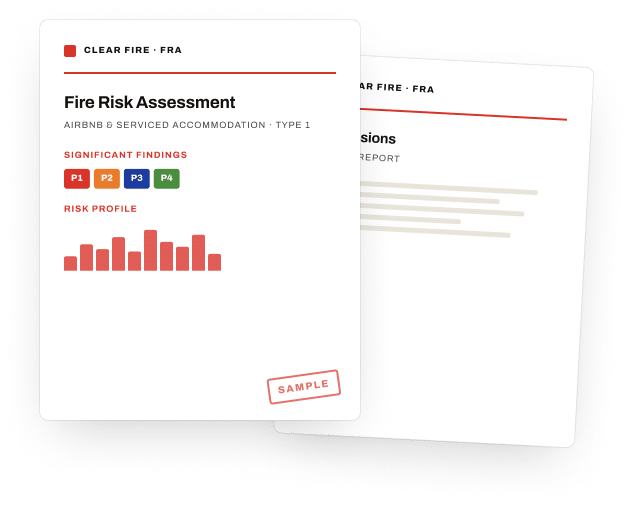
Your assessment arrives as a signed PDF with a management summary, photographic evidence linked to every finding and a separate evidence appendix suitable for business owners, insurers and property stakeholders.
Findings are prioritised using the PAS 79-1 risk matrix, helping responsible persons identify which actions require immediate attention and which can be planned around normal trading activity.

Tell us about the premises and we'll confirm scope and availability within one working hour. Jon or Kevin on site, signed report within 24 hours of invoice paid.
If you're unsure what applies to your premises, speak directly with the assessors who carry out the work. You'll get practical guidance based on the way your business operates.
Yes. Most retail premises require a suitable and sufficient fire risk assessment under fire safety legislation.
Yes. Storage areas are often a significant contributor to fire loading and are routinely assessed.
Yes. Temporary displays and layout changes can affect escape routes and evacuation arrangements.
Both are assessed, although the risks and management considerations often differ.
Escape route obstructions, storage practices, fire door defects and training gaps are among the most common findings.
In many cases, yes. Assessments are planned to minimise disruption wherever possible.
Insurers may request evidence that fire safety risks have been assessed and managed appropriately.
Reviews should take place whenever significant changes occur and as part of ongoing fire safety management.
Tell us about your site. We'll respond within one working hour during business hours.