Customers see the front of house. The greatest risks often sit behind it. Fire risk assessments for pubs, restaurants and hospitality venues across Bedfordshire, Buckinghamshire, Berkshire, Oxfordshire, Wiltshire and Gloucestershire.
Most hospitality businesses focus on service, staffing and customer experience. Fire risk develops elsewhere, in kitchens, storage areas, plant spaces, delivery routes and the routines that happen before opening and after closing.
The challenge is that trading environments change constantly. Menus evolve, equipment is replaced, layouts shift and occupancy levels fluctuate throughout the year.
ClearFire assesses pubs and restaurants as operational businesses, reviewing customer areas, kitchens, storage spaces and fire safety arrangements together to create a realistic picture of risk.

Drawn from recurring findings identified across hospitality venues, dining establishments and licensed premises.
Grease accumulation, missed cleaning schedules and poorly maintained extraction systems remain among the most common fire safety concerns in commercial kitchens.
Fire doors wedged open between kitchens, service corridors and customer areas, reducing compartmentation where it matters most.
Packaging, supplies and waste stored too close to cooking equipment, extraction systems or other potential ignition sources.
Kitchen staff unsure how to isolate gas supplies during an emergency or unaware of emergency shut-off locations.
Furniture layouts, deliveries and temporary storage reducing the effectiveness of escape routes during busy trading periods.
New starters unfamiliar with evacuation procedures, fire safety responsibilities or the emergency arrangements for the premises.
Fire detection arrangements no longer reflecting changes to layouts, occupancy levels or operational areas within the venue.
Occupancy patterns changing significantly between daytime and evening service, creating different evacuation and management challenges.
Inspection, servicing and testing records incomplete, outdated or unavailable when requested by insurers or authorities.
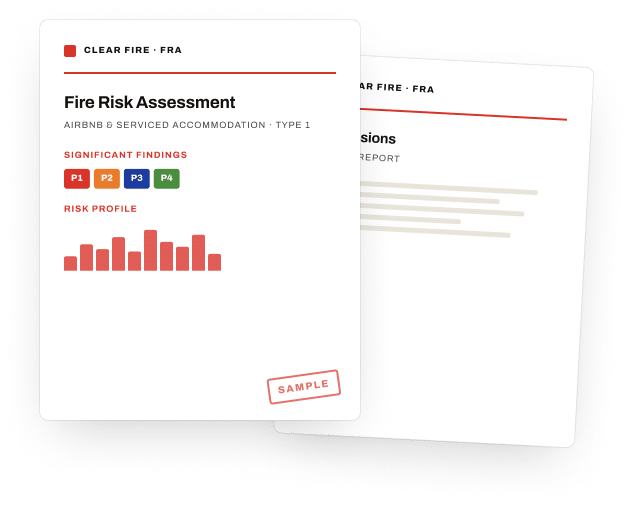
Your assessment arrives as a signed PDF with a management summary, photographic evidence linked to every finding and a separate evidence appendix suitable for insurers, landlords and licensing stakeholders.
Actions are grouped by priority, helping operators understand what requires immediate attention, what can be scheduled and what should be monitored as part of normal venue management.
Kevin was superb in responding quickly when asked to step in and replace an inadequate fire risk assessment delivered by another firm.


Tell us about the venue and we confirm scope and availability within one working hour. Kevin or Jon on site, signed report within 24 hours of invoice payment.
If you're unsure what applies to your venue, speak directly with the assessors who carry out the work. You'll get practical guidance based on how the business operates.
Yes. Pubs, restaurants and licensed premises are generally required to have a suitable and sufficient fire risk assessment under fire safety legislation.
Yes. Kitchens are often one of the most significant fire risk areas within hospitality premises and form an important part of the assessment.
Yes. Customer areas, circulation routes and means of escape are reviewed alongside operational spaces.
Kitchen extraction maintenance, fire door misuse, storage practices and staff training gaps are among the most common findings.
The assessment can provide supporting evidence that fire risks have been reviewed and managed appropriately.
Yes. Temporary seating, event layouts and operational changes can affect escape routes and occupancy arrangements.
Insurers may request evidence that fire risks have been identified and managed appropriately.
Reviews should take place whenever significant changes occur and as part of ongoing fire safety management.
Tell us about your site. We'll respond within one working hour during business hours.